REM Sleep and Sleep Apnea: Why Breathing Problems Can Get Worse Later in the Night for Philadelphia Patients
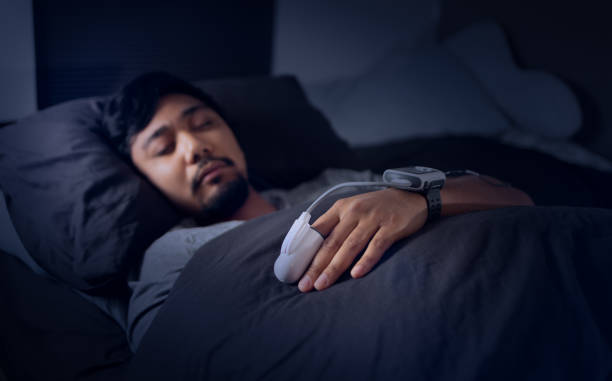
A Philadelphia patient looks at a new sleep-study report. The overall AHI seems modest, but the REM AHI is much higher, and oxygen levels dropped more sharply in the final hours of the night.
Sleep apnea does not always stay the same severity all night. Three things shape how bad it gets at any given moment: sleep stage, airway anatomy, and body position.
REM sleep is the stage tied to vivid dreaming. It also brings a significant drop in skeletal muscle tone, and that drop can directly affect airway stability. For someone with obstructive sleep apnea, this can mean the airway is more likely to narrow or collapse specifically during REM.
This connection between REM sleep and sleep apnea explains something important. Two patients can share the same overall AHI and still have very different physiology, airway anatomy, oxygen burden, and sleep fragmentation, which is why their symptoms and overall clinical picture can look nothing alike. If you’ve seen what your AHI score means but still don’t feel like it tells the whole story, REM sleep may be part of the answer. A fuller sleep apnea evaluation in Philadelphia can help sort out why.
What Happens to Your Airway During REM Sleep?
REM stands for rapid eye movement sleep. During this stage, the brain is highly active, and dreaming is common.
Most skeletal muscles become significantly less active during REM sleep. This helps keep the body from physically acting out dreams. The same drop in muscle tone can also affect the structures that support the upper airway, and in someone with obstructive sleep apnea, that can make breathing during sleep less stable, though it does not mean every throat muscle goes completely limp.
Why Muscle Tone Drops During REM Sleep
Reduced muscle tone during REM sleep is a normal, expected part of healthy sleep physiology. According to the National Heart, Lung, and Blood Institute, muscles normally become limp during REM sleep to prevent a person from acting out their dreams.
In a person with vulnerable airway anatomy, that same normal relaxation can work against them. Reduced airway muscle tone plus a narrow or crowded airway can add up to a greater risk of obstruction during REM sleep than during other sleep stages.
How the Tongue and Soft Tissues Can Narrow the Airway
When airway-supporting muscles relax, the tongue may sit farther back in the mouth. Soft tissue in the throat can also become more collapsible.
This combination can narrow the pharyngeal airway and increase resistance to airflow. For a closer look at this mechanism, see how tongue position affects snoring and sleep apnea.
Why Jaw Position and Palate Shape Matter More During REM
Airway anatomy determines how much a person is affected when muscle tone drops. A recessed or small lower jaw, a narrow or high-arched palate, and limited oral or tongue space can all reduce the room available for air to move freely.
These anatomical factors do not cause REM sleep to lower muscle tone. But they can determine how much that normal drop in tone actually affects breathing. Learn more about how jaw position affects the airway, or see narrow palate and sleep apnea for more on oral anatomy’s role.
What Is REM-Related Obstructive Sleep Apnea?
Some patients have obstructive breathing events that are noticeably more frequent or more severe during REM sleep than during non-REM sleep. Sleep clinicians sometimes describe this pattern as REM-related obstructive sleep apnea, a term generally used when a sleep study shows apneas and hypopneas concentrated mainly in REM sleep, according to a commentary in the Journal of Clinical Sleep Medicine.
There is no single universal cutoff that applies to every patient. How this pattern is interpreted depends on the full sleep study and the evaluating physician’s clinical judgment.
REM AHI vs Overall AHI
Overall AHI summarizes respiratory events across the entire night. REM AHI looks specifically at events that happen during REM sleep.
Because of this difference, a patient can have a relatively low overall AHI paired with a much higher REM AHI. This distinction matters because it can reveal a pattern that the overall number alone does not show.
Can Mild Sleep Apnea Be Worse During REM?
Yes, this is possible, though it does not mean a mild overall AHI is automatically hiding something severe. An overall “mild” category can sometimes conceal periods of more concentrated obstruction during REM, including longer events, deeper oxygen desaturation, and more clustering of events in a shorter window. This can show up as more noticeable morning symptoms than the overall number would suggest.
Limited REM time during a study can also skew the overall average. This is one reason a single overall number, on its own, does not tell the complete story. It’s a reason to look at the fuller picture, not a diagnosis in itself.
Why REM Sleep Later in the Night Matters
REM periods generally become longer as the night goes on. In fact, people typically have more REM sleep later in the night, with dreaming most common during this stage.
This means someone who only completes the first few hours of a sleep study may not show the same REM-related pattern as someone who sleeps through a full night. That doesn’t mean every shortened sleep study is invalid. It means REM timing is one more variable worth understanding when interpreting results.
Why Sleep Position Can Make REM Sleep Apnea Even Worse
REM sleep and body position are two separate variables that can combine. REM sleep, supine sleeping, and vulnerable airway anatomy together can add up to greater airway collapsibility than any one factor alone.
Why Sleeping on Your Back Can Narrow the Airway
Gravity affects the tongue, soft palate, jaw, and surrounding soft tissue differently depending on position. When sleeping on the back, gravity can pull these structures backward, narrowing the airway further.
This effect can stack on top of the muscle relaxation that already happens during REM sleep. For some patients, this is part of why finding the best sleeping position for sleep apnea is worth discussing with their care team.
Side Sleeping vs Back Sleeping for Obstructive Sleep Apnea
Some patients have a lower frequency of breathing events when sleeping on their side compared to their back. This does not mean side sleeping cures sleep apnea or replaces evaluation and treatment.
For many patients, positional sleep apnea is simply one more factor worth discussing with their evaluating team.
Why Position Should Be Reviewed Together With REM AHI
Sleep studies often break down events by sleep stage (REM versus non-REM) and by body position (supine versus non-supine). It’s worth asking a few questions when reviewing results:
- Was enough REM sleep recorded to draw conclusions?
- How much of the night was spent on the back?
- Was REM sleep mostly supine?
- Did oxygen levels fall more during REM than during other stages?
How REM Sleep Apnea Can Affect Oxygen Levels and Sleep Quality
Some REM-related events are associated with meaningful drops in oxygen. Reduced airway support during REM, combined with potentially longer hypopnea and apnea events in some patients, can lead to repeated, intermittent oxygen instability.
Why Oxygen Drops May Be More Noticeable During REM
Longer periods of obstruction generally mean less ventilation, which can allow oxygen levels to decline further before breathing resumes. This is one reason oxygen desaturation during sleep can carry more weight during REM-related events than their number alone suggests.
Why AHI Alone May Underestimate the Patient Experience
Two patients can have a similar overall AHI and still have very different clinical pictures. Differences in airway anatomy, physiology, REM AHI, oxygen nadir, time spent with low oxygen, event duration, sleep fragmentation, and day-to-day symptoms can all vary even when the headline number looks the same.
This is a central reason Sleep Healthy PA looks at the complete picture rather than one metric. A patient’s sleep history and health history, combined with airway anatomy, symptoms, and the sleep study itself, are what show why a patient’s airway is structurally at risk, not just how many times it collapsed.
Brain Fog, Headaches, and Morning Exhaustion
Disturbed REM sleep and repeated respiratory events can add up to non-restorative sleep. Over time, this can show up as brain fog, headaches, memory difficulty, irritability, or daytime sleepiness.
Many patients describe feeling tired all day despite what looks like a full night of sleep. These symptoms are a reason to look closer, not a diagnosis by themselves.
Can Mouth Breathing or Nasal Obstruction Worsen REM-Related Sleep Apnea?
Nasal resistance can make breathing more difficult and encourage mouth opening during sleep. When that happens alongside the airway muscle relaxation of REM sleep, the combination can further reduce airway stability.
Why Nasal Breathing Supports Airway Function During Sleep
Nasal breathing plays a role in filtering and humidifying air, regulating airflow resistance, and supporting a more stable oral posture during sleep. This doesn’t mean nasal breathing alone prevents obstructive sleep apnea, but it is one supportive factor among several. Learn more about nasal breathing and nighttime airway function.
Why Mouth Breathing May Signal an Airway Problem
Mouth breathing at night can reflect nasal obstruction, habit, congestion, enlarged tissue, or the body compensating for a compromised airway. It’s a pattern worth mentioning during an evaluation, not a standalone diagnosis.
How REM-Related Sleep Apnea Appears on a Sleep Study
A sleep physician may review several pieces of data together on a sleep study: overall AHI, REM AHI, non-REM AHI, supine AHI, oxygen nadir, the oxygen desaturation index, hypopneas and apneas, sleep-stage distribution, snoring, and respiratory arousals.
Why Enough REM Sleep Must Be Recorded
If a patient has very little REM sleep during a study, there may be less data available to judge REM-specific severity. This is a limitation worth understanding, not a reason to assume the test failed.
Home Sleep Study vs In-Lab Testing for REM-Related OSA
Home sleep apnea tests can estimate respiratory events, but they typically do not directly measure sleep stages the way full polysomnography does. Because of this, they may offer less direct information about how events are distributed across REM and non-REM sleep.
This doesn’t make home testing the wrong choice for every patient. It’s simply one more factor to weigh when interpreting results.
Why the Whole Report Matters More Than One Number
AHI, REM distribution, body position, oxygen data, symptoms, and airway anatomy together help build a complete clinical picture that no single number can provide on its own. Understanding how these pieces fit together, rather than relying on one metric, is where a more complete evaluation begins.
Airway Anatomy Philadelphia Patients Should Consider Beyond the Sleep Study
A sleep study shows what happened while a patient slept. An airway-focused oral examination investigates why the airway may be vulnerable in the first place, including anatomical scoring methods like Mallampati classification, which describes how much of the airway is visible on a simple oral exam. This is where airway dentistry can add value alongside medical sleep evaluation.
Jaw Position and Bite Alignment
Jaw position and bite relationship can influence how much space is available for the tongue and airway. A recessed jaw, an underbite, or certain other bite patterns may be worth discussing as part of a fuller evaluation.
Tongue Space and Palate Width
Limited tongue space and a narrow palate can reduce the functional room available for air to move through the mouth and throat. These findings help explain why the airway may be prone to narrowing, rather than serving as standalone diagnostic markers.
Snoring, Bruxism, and Other Dental Clues
Snoring, teeth grinding, and other dental findings are not diagnostic on their own. They can, however, justify a closer look at airway function and overall sleep health.
How REM-Related Sleep Apnea Is Treated in Philadelphia
Treatment depends on several factors together: severity, REM distribution, oxygen data, body position, airway anatomy, symptoms, other medical conditions, and patient preference. There is no single sleep apnea treatment option that fits every patient.
CPAP and Positive Airway Pressure
CPAP is a common, well-studied treatment that supports airway patency throughout the night, including during REM sleep. For many patients, it remains an effective first-line option.
Custom Oral Appliance Therapy
For appropriately selected patients, custom oral appliance therapy for sleep apnea works by supporting a more forward jaw position, which may increase airway space and reduce obstructive events. It is not the right fit for every patient, and whether it’s appropriate depends on the same full evaluation discussed throughout this article.
Positional and Airway-Focused Strategies
Positional therapy, nasal breathing support, and other airway-focused habits can play a supporting role for some patients. These strategies are not substitutes for medically indicated treatment, and appropriate referral to an ENT or sleep physician remains an important part of coordinated care.
When Philadelphia Patients Should Ask About REM-Related Sleep Apnea
Consider bringing this topic up at your next evaluation if:
- Your overall AHI seems mild, but your symptoms feel severe
- Morning fatigue remains significant despite treatment or a full night’s sleep
- Oxygen drops seem to occur mainly later in the night
- Snoring worsens toward morning
- Your report lists a notably higher REM AHI than overall AHI
- Symptoms seem worse when you sleep on your back
- Treatment seems less effective later in the night
FAQs About REM Sleep and Sleep Apnea
Why is sleep apnea worse during REM sleep?
REM sleep reduces muscle tone that helps support the upper airway. In patients whose airway anatomy is prone to narrowing, this can increase the likelihood of airway collapse during that stage.
What is REM-related obstructive sleep apnea?
It’s a term used to describe obstructive breathing that becomes disproportionately more frequent or severe specifically during REM sleep, compared with the rest of the night.
Can you have mild sleep apnea overall but severe sleep apnea during REM?
Yes. An overall AHI in the mild range can sometimes conceal a much higher frequency of events during REM sleep, which is one reason REM AHI is worth reviewing separately.
Does sleep position affect REM sleep apnea?
Yes. Sleeping on the back can increase gravitational narrowing of the upper airway, and this effect can add to the muscle relaxation that already occurs during REM sleep.
Can mouth breathing make REM sleep apnea worse?
Mouth breathing may accompany nasal resistance and less stable airway mechanics, though it should not be assumed to directly cause sleep apnea on its own.
Can an oral appliance help REM-related sleep apnea?
For appropriately selected patients with obstructive sleep apnea, custom mandibular advancement may help improve airway stability. Whether it’s the right option depends on individual evaluation.
Should I be concerned if my REM AHI is much higher than my overall AHI?
A higher REM AHI helps explain how your breathing changes by sleep stage. It’s worth reviewing with your treating sleep professional rather than interpreting on your own.
Get a More Complete Sleep Apnea Evaluation in Philadelphia and Jenkintown, PA
AHI is only one part of interpreting a sleep study. REM stage, oxygen changes, body position, symptoms, and airway anatomy all matter, and none of them tells the whole story on their own. Our goal is not simply to label the severity of sleep apnea, but to understand the patient, the airway, and the factors contributing to the breathing problem.
At Sleep Healthy PA in Jenkintown, PA, Dr. Andrew Cohen evaluates the airway-related dental factors that contribute to sleep apnea and coordinates with sleep physicians when medical diagnosis or management is needed. If your sleep study results haven’t fully explained how you feel, schedule a sleep apnea consultation in Jenkintown to talk through the full picture.

